
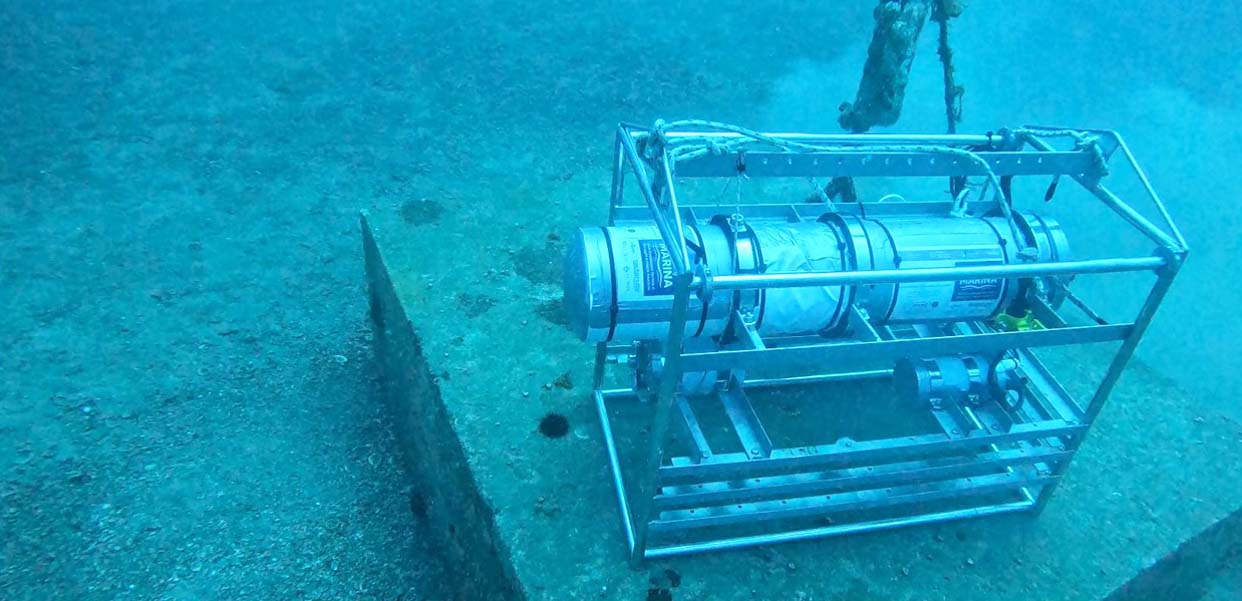
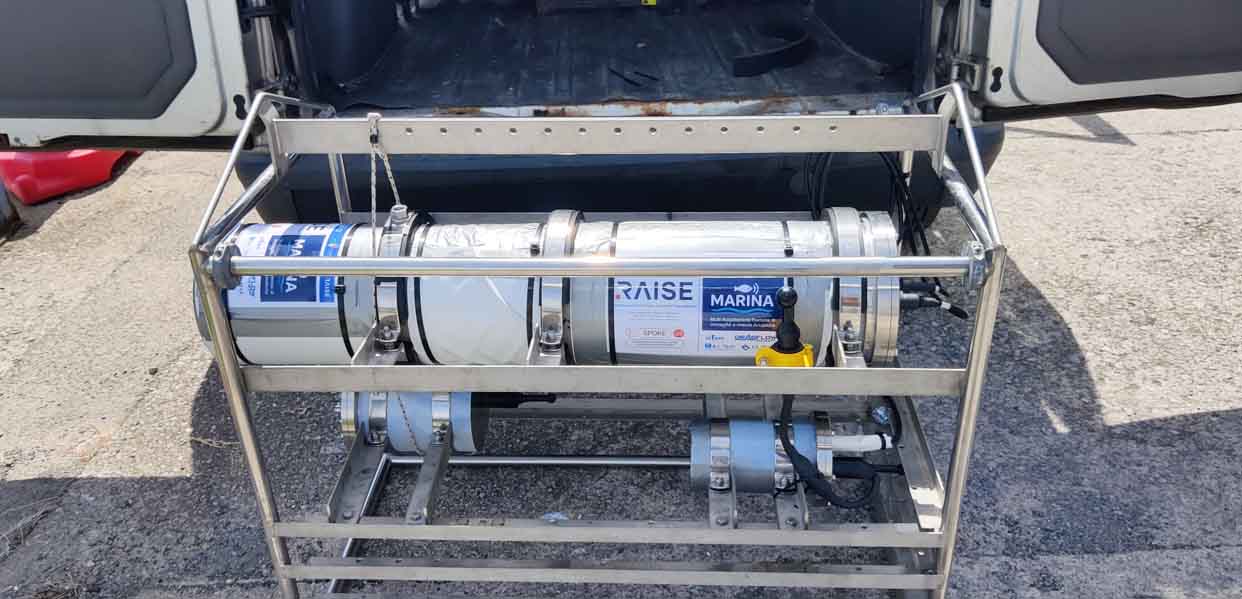
MARINA is a project aimed at developing a modular underwater platform capable of providing integrated information through the synergistic combination of acoustic data, images, and video for monitoring fish fauna aggregations in Marine Protected Areas.
The platform consists of four main modules: a system for acoustic signal acquisition, a module for image and video collection, a power supply unit, and a support structure designed to house the various components. This configuration allows the system to be used both in autonomous mode and from vessels, enabling monitoring activities distributed over extensive marine areas.
The proposed approach finds application in numerous fields of marine research, including marine biology and ecology, fisheries science, oceanography, and environmental monitoring. In addition to scientific uses and the protection of Marine Protected Areas, the platform can also be employed in industrial contexts, such as for fish stock assessment or environmental impact studies related to the installation of offshore wind farms.
The project addressed significant technological challenges, developing solutions for prolonged operation, an innovative bio-wiper system for cleaning optics, an optimized frame to reduce vibrations and currents, advanced energy management systems, and dedicated machine learning algorithms. The Bergeggi Island Marine Protected Area hosted the prototype as an end-user, demonstrating its validity in the hypothesized application context. Further developments were carried out in the MARINA_Beyond project, an extension of the original project, through which several hardware and software components were optimized to increase automation, usability, and overall efficiency.
Results:
The project led to the development of a fully operational prototype of a technologically advanced (TRL7), integrated, and scalable modular underwater platform for continuous monitoring in marine environments, serving as a tool to support sustainability and the reduction of environmental impact.